info@monitooapp.com
info@monitooapp.com
info@monitooapp.com

Productivity , Efficiency
27 de February de 2026 - 16h02m
Share
Do you still use tools that automatically capture your team’s screen?
In 2026, this model is already considered outdated by companies that take productivity and organizational culture seriously.
For years, screenshot-based monitoring systems were sold as the ultimate solution for remote management. The logic was simple: the more visibility, the more control.
But what seemed like efficiency revealed a structural problem.
Tools that rely on frequent screen captures, when implemented without strategic transparency, are associated with a significant increase in voluntary turnover. Market estimates point to variations between 20% and 30% in environments where monitoring is perceived as constant surveillance.
The market has evolved.
The focus moved away from visual oversight.
We have entered the era of predictive intelligence.
The future of productivity monitoring is not about proving what someone did.
It’s about predicting what can be improved.
How the traditional model works
For many years, most digital monitoring tools adopted a format based on:
At first glance, this provides proof of work.
But proof is not the same as improvement.
When analyzing public reviews and market feedback about tools that use this format, the most common concerns include:
The model is essentially reactive.
The manager sees a screenshot.
Then reacts.
That is not operational intelligence.
It is digital auditing.
In Brazil, the LGPD establishes principles such as:
In Canada, particularly under Law 25 (Quebec), the principle is similar: data collection must be proportional and justifiable.
Constant screen captures can raise concerns such as:
The greater the volume of visual data collected, the higher the legal risk.
Modern monitoring must be intelligent and proportional.
The traditional model answers limited questions:
But it does not answer what truly matters:
In 2026, leaders are not just looking for visibility.
They are looking for predictability.
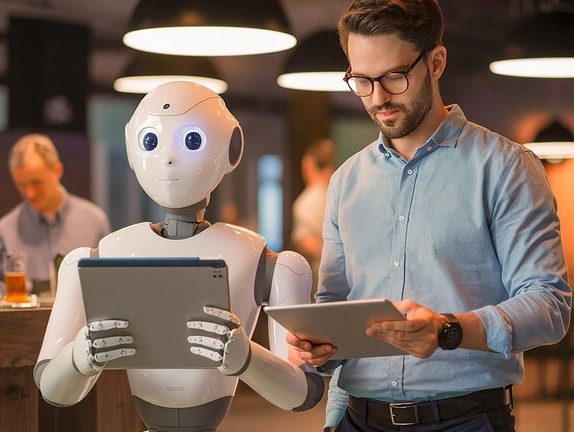
The new generation of monitoring uses artificial intelligence to analyze aggregated behavioral patterns and generate automated recommendations.
It’s not about capturing images.
It’s about interpreting data.
What AI analyzes
From these patterns, it becomes possible to predict:
This completely changes the manager’s role.
Imagine a development team.
AI identifies that:
Instead of merely recording activity, the system suggests:
This is the true concept of intelligent monitoring:
Prevention, not punishment.
While traditional models focus on frequent screen captures, Monitoo adopts a data intelligence-based approach.
The focus is on:
The logic shifts:
From individual control to systemic improvement.
Frequency
Screenshots every few minutes vs Continuous pattern analysis
Privacy
Constant visual collection vs Aggregated strategic data
Action
Reaction after viewing a screenshot vs Automated recommendations
Culture
Surveillance vs Transparency
Result
Tension vs Sustainable productivity
1. Reduced micromanagement
Managers stop analyzing images and start analyzing indicators.
2. Increased predictability
Performance drops can be anticipated before becoming serious problems.
3. Trust-based culture
Employees have access to their own data.
Transparency reduces insecurity.
4. Focus on productivity percentage
The focus shifts away from total hours.
Efficiency becomes the priority.
This leads to smarter decisions.
Step 1 – Define a strategic objective
Technology should not be implemented to surveil.
It should be used to improve processes.
Step 2 – Ensure transparency
Clearly communicate the purpose
Share dashboards
Allow self-analysis
Step 3 – Legal alignment
Align internal policies with LGPD and other international data protection regulations.
Step 4 – Train leaders
AI does not replace leadership.
It enhances decision-making capacity.
If you cannot answer the last questions with clear data, your model is still reactive.
The trends are clear:
The market no longer wants surveillance.
It wants applied intelligence.
Screenshots show screens.
AI shows direction.
The future of productivity monitoring is not about capturing what already happened.
It is about predicting what can be improved.
Companies that adopt predictive AI achieve:
Try Monitoo free for 7 days
and discover the difference between watching people and optimizing results.


 Talk to us
 Request free trial